
7 Reasons Fall Molting Isn't Always the Real Story (And What Actually Fixes It)
Fourteen years of chicken health cases have taught me one thing about this time of year: molting explains most feather loss, but not all of it. Here's how I tell the difference, and what I recommend when it isn't.


1.Real Molting Follows a Pattern. A Lot of What I See Doesn't.

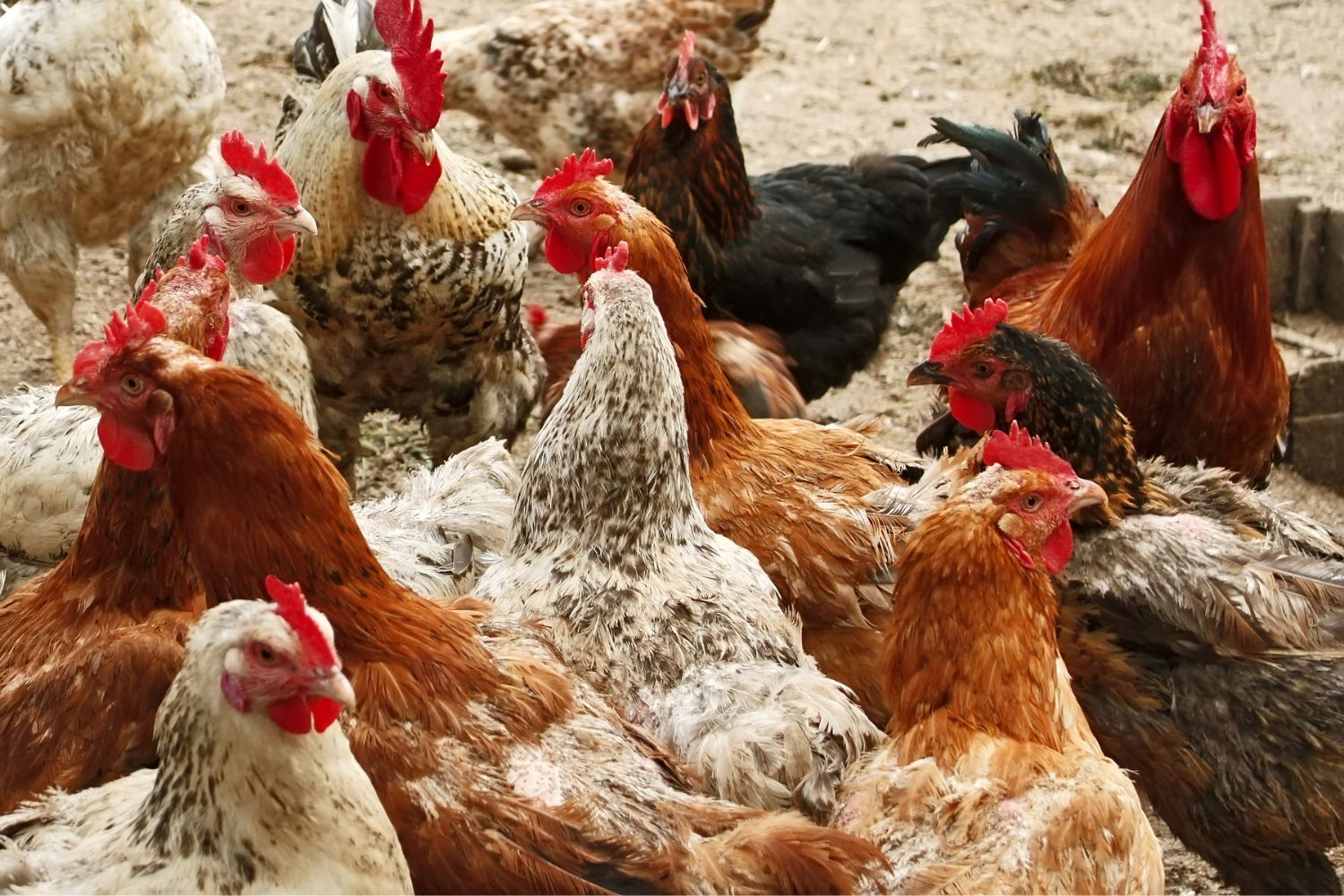
A true fall molt starts at the head and neck and moves down the body over several weeks, roughly even on both sides.
When I see feather loss that's patchy, concentrated around the back or vent, or dragging on without that head-to-tail progression, I stop assuming it's the molt doing its job.
- Patchy, uneven feather loss
- Bare back or bare vent
- Dragging on for months
- No head-to-tail pattern
A molt finishes on its own. This doesn't. Something is getting in the way of regrowth, and waiting it out won't fix it.
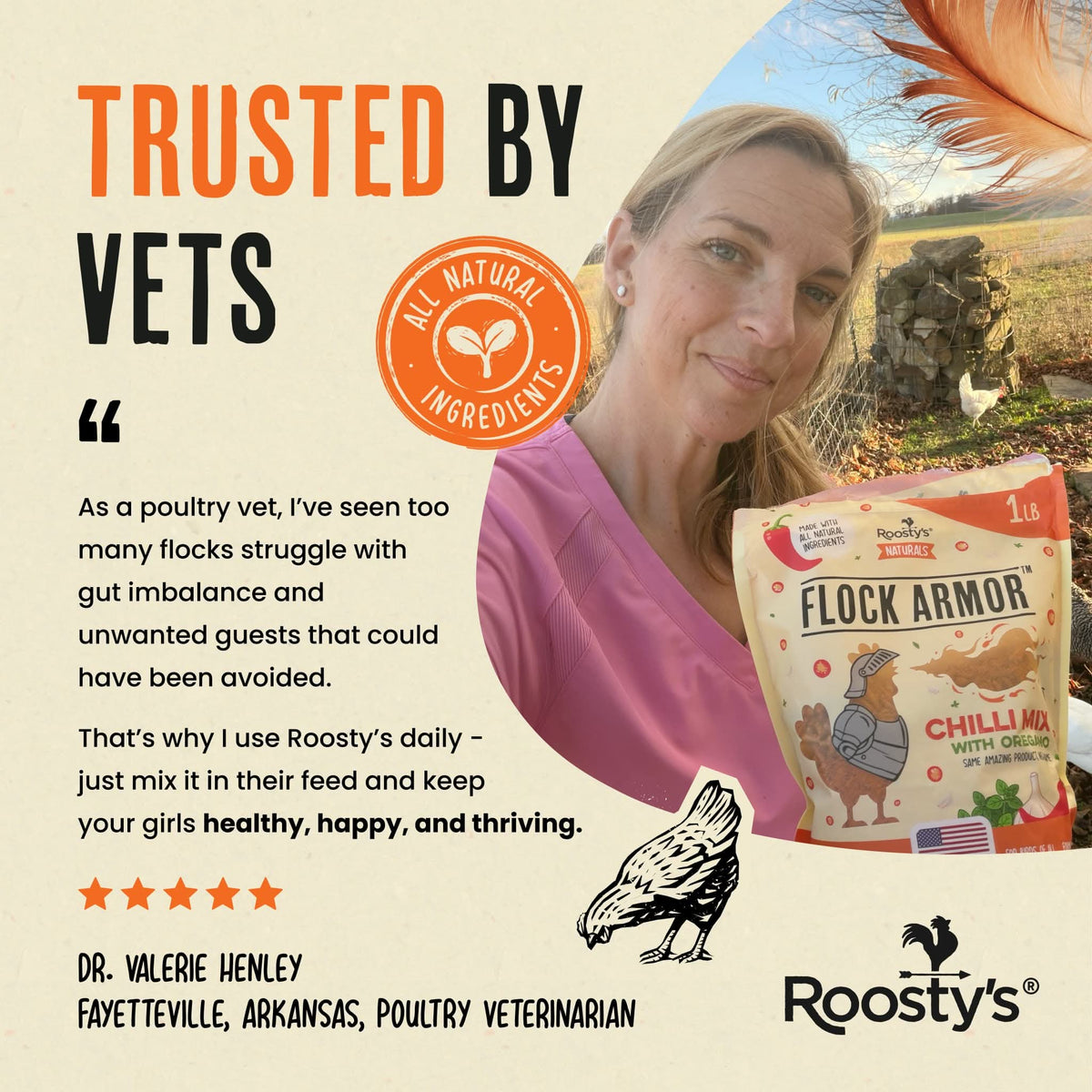
2.I See Parasite Load in 80-90% of Backyard Flocks I Check

That's not something that shows up only in fall, it's a year-round reality that fall just makes easier to miss because everyone's watching for molt instead. It's why I recommend a daily routine over a once-a-year fix.
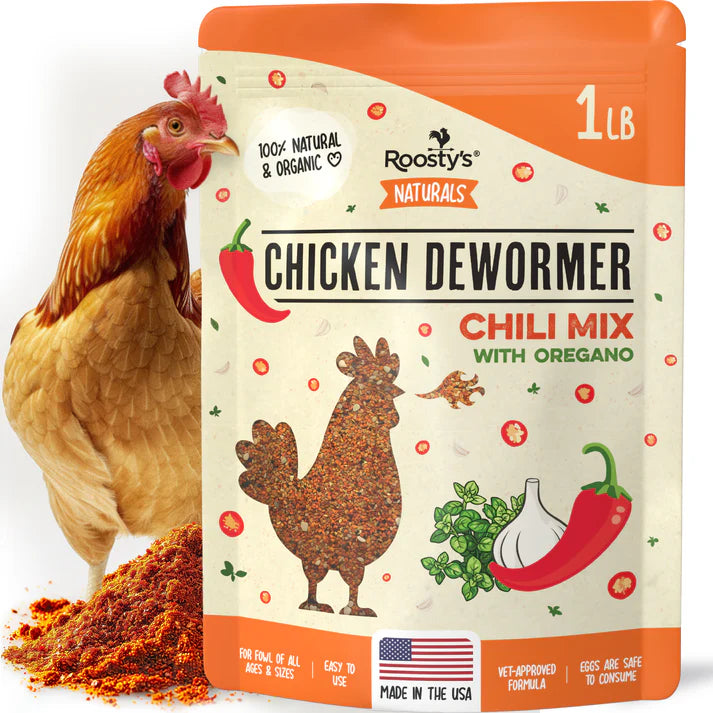
Flock Armor uses capsaicin from chili to create an environment in the gut that's inhospitable to the parasites competing for a hen's protein, working continuously rather than only after symptoms appear.

of the backyard flocks I check are carrying a parasite load.
3.Feathers Are Almost Pure Protein. If Something's Intercepting It, More Feed Won't Help.

This is the piece that trips up even experienced keepers. If parasites are pulling nutrients out of the gut before her body can use them, it doesn't matter how much protein goes into her feed.
Oregano and garlic support the gut through that stress, so once things settle, the protein she's eating actually reaches her follicles instead of being diverted elsewhere.
4.I've Stopped Recommending Home Remedies. Here's Why.

Butt baths, kitchen spice mixes, deep coop cleans, I understand the instinct behind every one of them. But none are formulated. You're either underdosing with no real effect, or overdoing it without knowing.
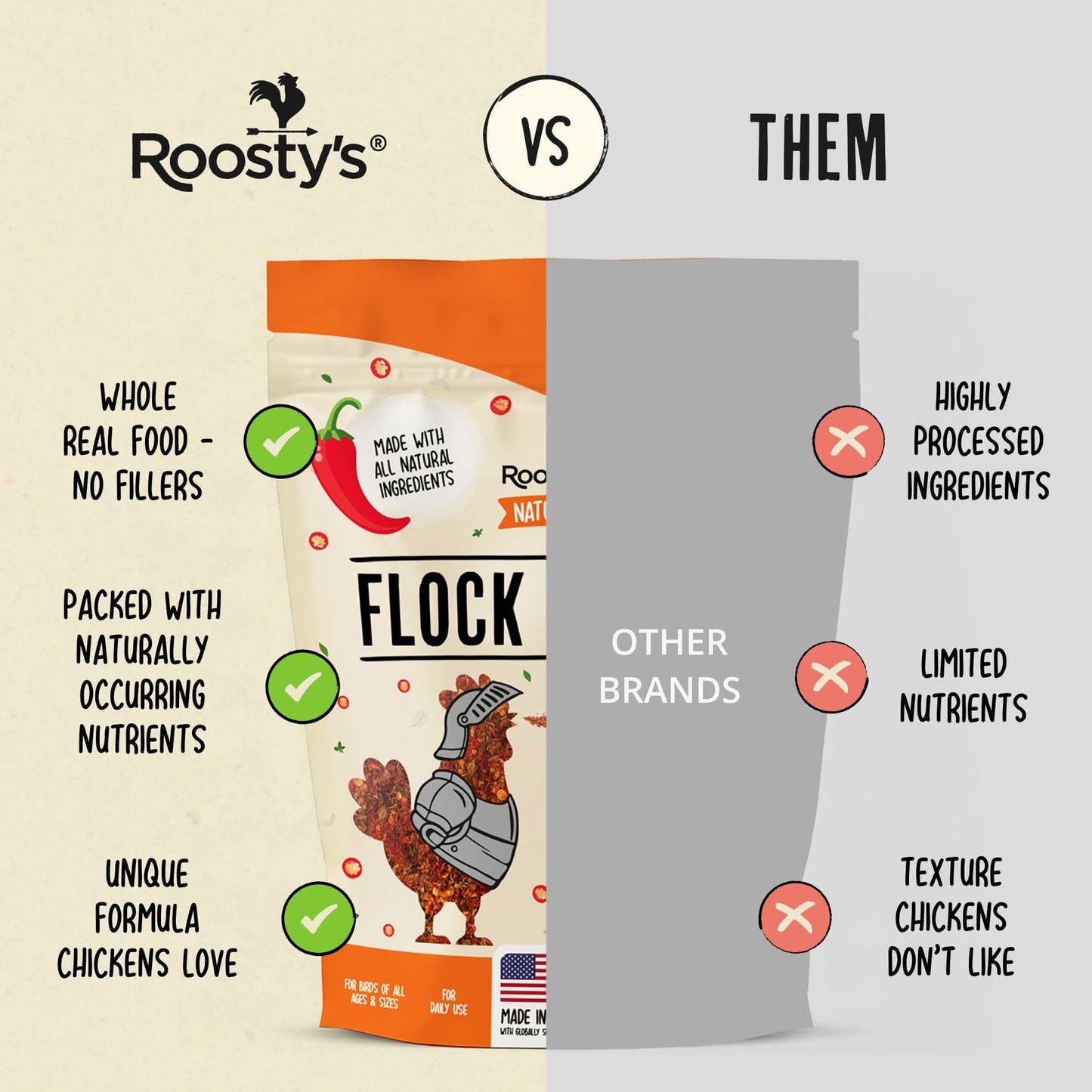
After 14 years, I don't guess at this anymore. Flock Armor is formulated to the same fixed ratio every time: chili, oregano, garlic, and black pepper, which improves how well everything else absorbs.

Capsaicin makes the gut a harder place for parasites

Supports the gut while it recovers

Supports healthy gut flora

Helps everything else absorb

Mix 1 pouch into a 50lb bag of feed, or 2 tablespoons per 3-7 birds if you feed by hand. Works with pellets, crumble or scratch.
5.The Recovery Timeline Isn't Guesswork Either

In the flocks I follow through this, it typically plays out in stages.
6.No Egg Withdrawal Means You're Not Choosing Between Protection and Breakfast

Chemical dewormers force that tradeoff. This doesn't.
You keep collecting and eating eggs the same day, every day, while her gut and feathers recover.
| Flock Armor | Chemical dewormers | |
|---|---|---|
| Keep every egg, every day | Yes | No |
| No egg withdrawal period | Yes | No |
| Made for backyard flocks | Yes | No |
| No weighing or re-dosing | Yes | No |
90-day money-back guarantee
7.Over 300,000 Flock Owners Are Already Doing This

This isn't a new or untested idea in the backyard chicken world. Roosty's is trusted by more than 300,000 flock owners, with a 4.8-star rating across 11,816+ reviews.
Here's what a few of them told us this fall specifically:
Marie's flock, one season apart
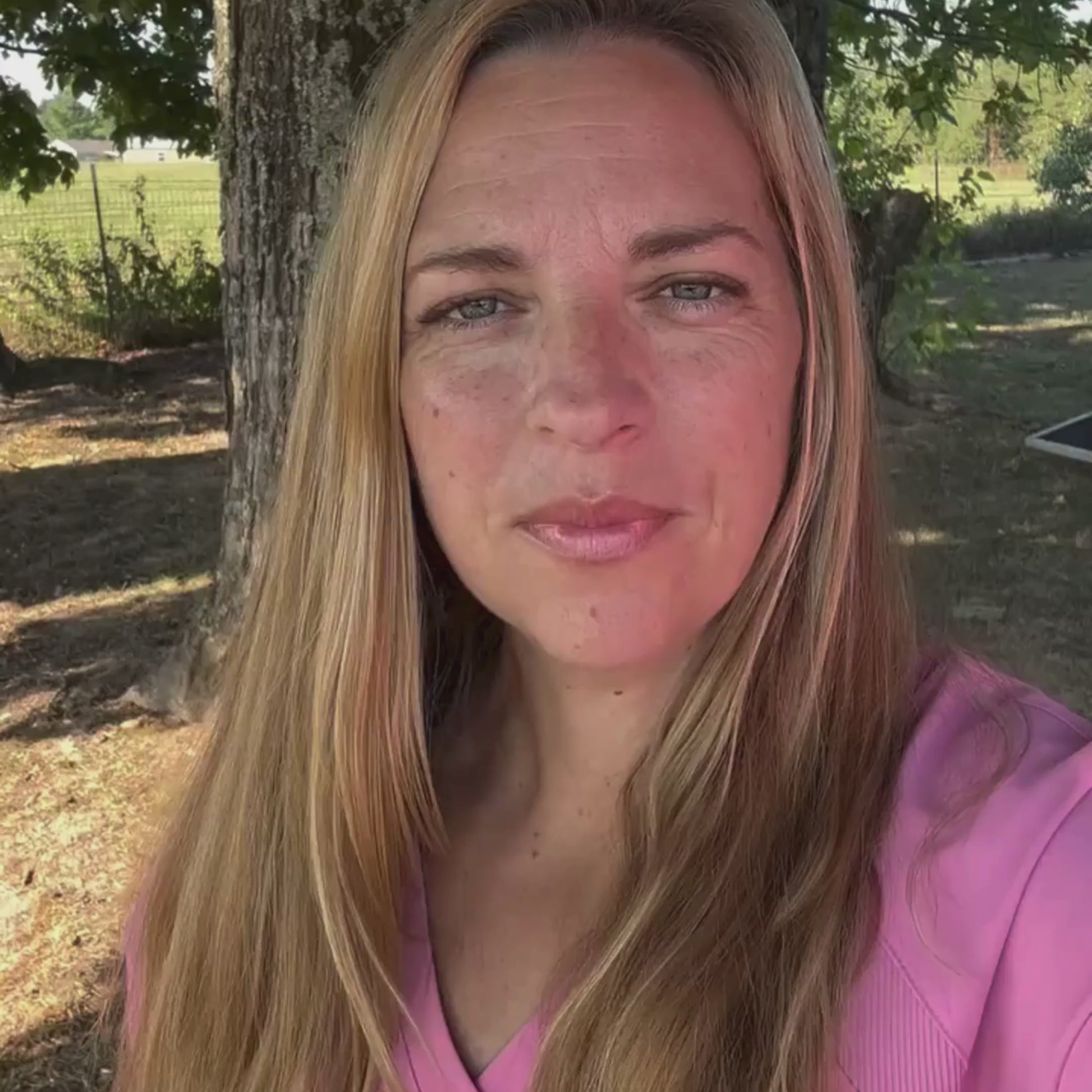
"Some of my chickens started to suffer with feather loss and I never put it to their immune system" Marie K, Tennessee · 9 hens · May to September on daily support




Daily Worm Defense + Gut Support
Daily Worm Defense + Gut Support

Better Egg Quality

Pest & Worm Defense

Feather & Vitality Boost

Gut Health Support
Serving Guidance: Simply add one pouch per 50lb bag of feed.

- Save 10% for life
- Free gifts included
- 90-day money-back guarantee
+ FREE GIFTS ON FIRST ORDER (WORTH $30)

Chicken Health Guide
$10 FREE
$10 Gift Card
$10 FREE
Egg Tracker App
$5 FREE
Shipping Protection
$5 FREE Shipped in 24 hours from our USA Warehouse
Tell Me About:


Can I feed it during a normal molt?
Can I feed it during a normal molt?
Yes. It is a daily feed supplement, not a treatment you save for a problem. Regrowing feathers is protein-hungry work either way, so a gut that's working well matters whether or not anything else is going on.
How soon will I see feathers coming back?
How soon will I see feathers coming back?
Many keepers notice pin feathers within two to four weeks. Full plumage takes longer, often two to three months, because feathers simply grow at their own pace. That is why the guarantee runs for 90 days.
What makes this formula special?
What makes this formula special?
Roosty’s Chili Mix was developed with poultry experts to deliver the right balance of high-quality natural herbs that support digestion and help maintain natural defenses.
Each serving is precision-measured and expertly blended to ensure consistent quality, safety, and reliability - something that requires careful formulation and testing to get right.
Even small imbalances in herb ratios can stress digestion or reduce benefits, which is why every scoop is blended for the right potency - safe for daily use and trusted for long-term flock wellbeing.
Can ducks & other poultry eat this?
Can ducks & other poultry eat this?
Absolutely! Our Flock Armor is safe for ducks, geese, turkeys, quail, and other poultry. Just adjust the amount based on your flock size.
Can I eat the eggs while using this?
Can I eat the eggs while using this?
Yes! Roosty’s is all natural, so there’s no egg withdrawal period - you can keep enjoying your eggs daily.
Will my flock eat it?
Will my flock eat it?
Yes - chickens & ducks can’t taste spice, so they won’t even notice the chili in the mix.
Just sprinkle it over their feed, and they’ll eat it like normal.
Why Subscribe?

Why Subscribe?

Our natural daily chili mix is a supportive solution designed to help deter unwanted guests and support your girls before issues can arise. We recommend daily use as a simple way to support your ladies’ gut health, vitality, and overall wellbeing.
Subscribing makes it easy to stay consistent - and consistency is key for daily support.
Choose a Monthly Subscription to receive your supply every month and enjoy up to 50% off, with the peace of mind that your flock is always supported.
What's included in my subscription?
What's included in my subscription?
🎁 Save big every month with exclusive subscriber pricing
📱 Daily Egg Tracker App
📘 Chicken Health & Laying Digital Guide
🛡️ Shipping protection for every order
⭐ Priority access to stock so you never run out
✅ 90-day money-back guarantee
🔁 Full flexibility in our subscriber portal - pause, change delivery frequency, or cancel whenever you wish