

SHE’S LOSING FEATHERS.
BUT IS IT JUST A MOLT?

Molt can make even a healthy hen look rough. But when the feathers aren’t coming back and other things start changing too, it’s worth looking closer.
GET FLOCK ARMOR
Vet-reviewed daily feed support


By Dr. Valerie Henley
Poultry veterinarian
Fayetteville, Arkansas
01
CAN YOU SEE NEW PIN FEATHERS?
Part the feathers around the patch and look closely.
During a normal molt, new feathers should begin appearing as small, stiff-looking spikes called pin feathers. They’re the new feathers growing underneath.
USUALLY REASSURING
You can see new feather growth coming through.
She’s stayed bare or patchy for weeks with little obvious new growth.


IS ONE HEN MUCH WORSE THAN THE REST?
Molt doesn’t look identical on every bird. Some hens shed harder and look rougher than others.
But if the rest of your flock is progressing normally while one hen stays bald, patchy or seems to be getting worse, don’t automatically blame molt.
Look at the whole hen, not just the missing feathers.
WHAT DOES HER COMB LOOK LIKE?
Molt can temporarily change a hen’s appearance and laying cycle.
But her comb is another useful clue to her overall condition.
If feather loss is happening alongside a comb that looks noticeably paler than usual, especially with other changes, it’s worth paying closer attention.

04
CHECK THE VENT TOO
This is one most keepers miss because they’re focused on the bald patch.
Take a quick look around her vent.
Persistent messiness or unusual droppings alongside poor feather condition can point to something beyond the feathers themselves.
Don’t diagnose from one sign. Look for patterns.

IS SHE ACTING LIKE HERSELF?
You know your flock better than anyone.
Is she still scratching, eating and following the flock normally?
Or is the hen with poor feather growth also quieter, less active or simply not herself?
One change might mean very little.
Several changes happening together are what deserve your attention.

GROWING A NEW COAT TAKES NUTRITION.
Growing feathers takes nutrition. Balanced feed comes first.
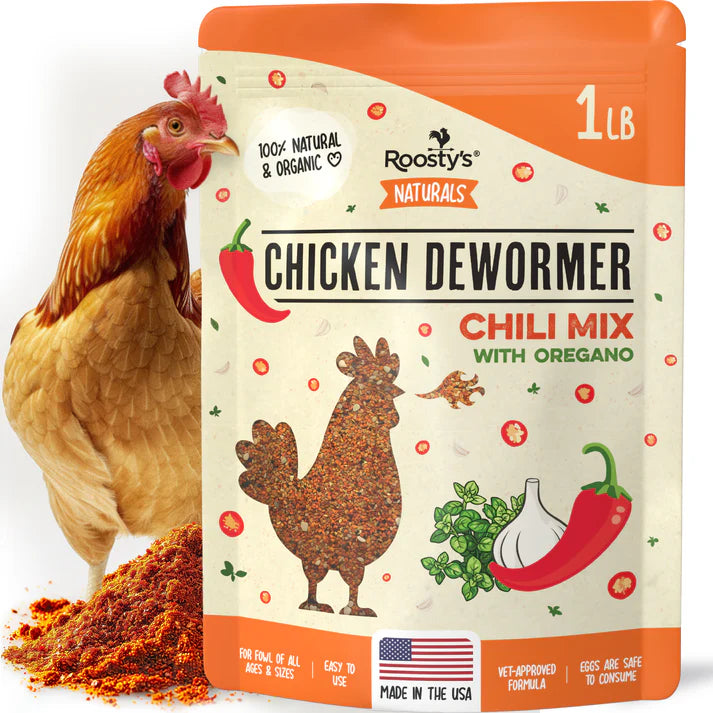
Flock Armor adds daily digestive support to their EXISTING feed. It doesn’t replace feed or veterinary care.


oregano, black pepper and flaxseed.


nutrient utilisation.

One simple daily addition.
REAL KEEPERS. EVERYDAY ROUTINES.

Verified Buyer


Here they are on my front walk checking to see if it got delivered yet.”
Verified Buyer


“I love that it is nutrients for my chickens and they don’t have messy butts or eggs”
Pamela M.
Verified Buyer

Dr. Valerie Henley' Choice
Roosty's Flock Armor
Daily parasite protection, no egg withdrawal from $32.99 $26.43/month
Vet-formulated daily protection built for backyard flocks
No egg withdrawal, keep collecting and eating eggs the same day
Supports a healthy gut, not just a quick fix for symptoms
A flock that's noticeably healthier within weeks, more energy, better laying, cleaner vents

Questions? hello@roostys.co
NEW YEAR SALE
ENDS SOON