

A Flock Health Advisory from Dr. Valerie Henley
A Poultry Vet's Warning:
It’s Not The Cold That Worries Me Most About Your Flock This Winter


I’m Dr. Valerie Henley, a poultry veterinarian with 14 years in practice. Every winter I see keepers focus on keeping their chickens warm while overlooking the other changes that can affect their flock.

Words by
Dr. Valerie Henley, Licensed Poultry Veterinarian
25,104 views
10 minute read
Why Winter Hits Your Flock Harder Than It Looks
Every winter I hear some version of the same question from chicken keepers:
"As long as the coop is warm, dry and out of the wind, my girls should be fine through winter, right?" - Not quite.
Those things are important, of course. I would never tell a keeper not to think about warmth, ventilation or good nutrition. But after 14 years working with poultry, the cold itself is rarely the only thing I’m thinking about when winter arrives.
What concerns me is everything else that changes at the same time.
As the days shorten, most backyard hens naturally spend more time inside or confined to a smaller area. The coop stays damp for longer. There is less sunlight, less movement and often less opportunity to forage. Birds that spent summer scattered around a large run are suddenly eating, drinking, sleeping and leaving droppings in a much smaller space.
For many hens, this also happens immediately after, or even during, one of the most nutritionally demanding periods of their year: the annual molt.
A hen replacing her feathers isn’t simply looking scruffy for a few weeks. Feathers are largely made from protein, which means her body has to divert substantial nutritional resources towards replacing them. At the same time, she still has to maintain body temperature, digestion, normal immune function and all of the ordinary processes required to keep herself in good condition.
That is why I don’t think of winter as one problem.
I think of it as several pressures arriving at once.
And that distinction matters, because a hen doesn’t have to look obviously sick for those pressures to start showing.
A keeper may simply notice that one bird isn’t first to the feeder anymore. Another spends a little more time sitting puffed up while the others scratch. Egg production may become less consistent. A difficult molt seems to drag on. A hen that looked beautiful a month earlier suddenly looks as though winter has taken quite a lot out of her.
None of those observations, on their own, tells me that a bird is ill. Chickens change their behaviour for all sorts of reasons. But when I’m advising keepers through winter, those small changes are why I prefer to think about supporting the flock before there is an obvious problem rather than after one appears.

And there’s a second reason I pay closer attention in winter: a hen may be growing new feathers just as the weather turns cold. She still needs the nutrition to maintain her body and support normal immune function. Keeping the coop warm is only part of looking after her.
What I’m Looking At That Most Keepers Aren’t
When I examine a hen, I’m not only interested in what she looks like from the outside. I’m thinking about what her body is being asked to do internally.
Her digestive system still has to break down feed and make nutrients available. Her immune system still has to perform its normal protective functions. Her body still has to maintain itself through colder temperatures. And if she’s molting, she also has to find the raw materials to build thousands of new feathers.
This is why simply giving a hen more of something isn’t always the answer.
A handful of scratch might provide additional calories, but it doesn’t replace a properly balanced feed. Closing every opening in a coop may make it feel warmer, but poor ventilation allows moisture and stale air to accumulate. A heat lamp changes the temperature, but it doesn’t change what is happening nutritionally inside the bird.
Good winter husbandry is about looking at the whole hen, not solving whichever part of winter happens to be most visible.
In practice, I want to see a dry, appropriately ventilated coop, clean drinking water, a good quality balanced feed and birds that are still behaving normally for their flock. I want keepers paying attention to appetite, posture, body condition, droppings and the hens that begin separating themselves from the group.
And during molt, I pay particularly close attention to the birds that seem to be having a harder time than everyone else.
This isn’t about panicking every time a hen fluffs her feathers.
It’s about knowing your flock well enough to recognise when several small changes begin happening together.
What I See Keepers Relying On Every Winter
Focusing only on warmth: Keeping hens protected from harsh cold matters, but temperature is only one of the pressures I’m thinking about in winter.
Sealing the coop too tightly: I want hens out of direct drafts, but I still want ventilation. A closed-up coop can quickly become damp and stale.
Overdoing treats and scratch: A little is fine, but extra corn and scratch shouldn’t displace the balanced feed your hens rely on for proper nutrition.
Writing everything off as molt: Molt is demanding on a hen’s body. If one of my patients is having a particularly rough molt, that’s when I pay closer attention, not less.
Waiting until she looks sick: This is the mistake I most want keepers to avoid. By the time a hen is obviously struggling, you’re no longer being proactive.
My approach is much simpler: get the fundamentals right first with balanced feed, clean water and a dry, well-ventilated coop.
During demanding periods like winter and molt, I’d rather build consistent nutritional support into the flock’s routine while they’re healthy than wait until one of them starts looking run down.
Here's What I Recommend To My Patients
When keepers ask whether there is anything they can add to that routine during winter, I look for three things.
It should complement a good balanced diet rather than replace it. It should contain ingredients I can make sense of nutritionally. And perhaps most importantly, it needs to be simple enough that a keeper will actually use it consistently.
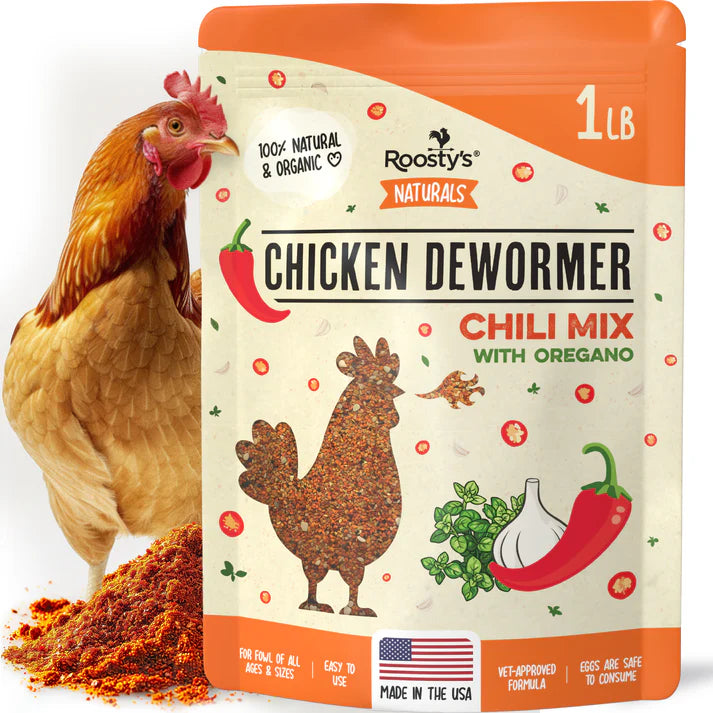
That’s why one of the products I recommend is Roosty’s Flock Armor.

4.8/5.0 from 6,363+ Chicken Owners
Here's why it works.
It’s made for daily gut-health and natural-defense support.
That’s the role I want it to play during winter and molt: nutritional support alongside the balanced feed your girls already rely on.
And unlike chemical dewormers, there's no egg withdrawal. You keep collecting and eating eggs the same day, every day.
It's vet-reviewed to a fixed ratio every single time, which is the piece that's missing from doing this yourself at home. Same ingredients in spirit, but built to actually work at the right strength, consistently, without you having to guess.
What it actually costs your flock
As little as 12-13 cents per bird, per day, less than the price of a piece of gum at the grocery store, buys daily protection for every hen in your flock. For your flock, that means daily gut support through the months when growing new feathers and staying warm both matter. I’d rather make that support part of the routine while your girls are healthy than reach for it only after something seems wrong.

How it works in plain terms
Mix 1 pouch into every 50lb bag of feed, or 2 tablespoons per 3-7 birds if you're feeding daily by hand
Works with pellets, crumble, or scratch, just mix it through whatever you're already feeding
If your flock's a little hesitant the first few days, mixing it into a favourite treat usually does the trick

Your winter routine, from the first week onward
Week 1
Make it part of the routine
Follow the label directions and keep their normal balanced feed in place.
Week 2
Check each hen
Watch appetite and activity. If one hen seems unwell, speak to a poultry veterinarian.
Week 4
Keep an eye on laying
Shorter days and molt can slow laying. Egg count alone won’t tell you how a hen is doing.
Month 2
Stay consistent through winter
Keep fresh water available and check the coop for damp bedding and poor airflow.
Month 3 & beyond
Keep watching your girls
Continue the daily checks as the season changes. A change in appetite or behavior deserves attention.
You’ve prepared the coop. Keep watching the hens, too.
You’ve checked the bedding, kept the drafts off them and made sure there’s feed in the feeder. You’re already doing the work to look after your girls.
What I want you to remember is that molt and winter can overlap. Growing new feathers takes nutrition, and cold weather asks more of a hen too. Her daily care needs to account for both.
Keep the basics steady. Flock Armor can sit alongside them as daily gut-health and natural-defense support. If a hen seems unwell, have her checked rather than assuming it’s just the season.

Dr. Valerie Henley' Choice
Roosty's Flock Armor
Daily gut support through winter and molt
from $32.99 $26.43/month
Vet-reviewed daily protection built for backyard flocks
No egg withdrawal, keep collecting and eating eggs the same day
Supports a healthy gut, not just a quick fix for symptoms
A simple daily step alongside their balanced feed