

UPDATE: September is peak molting season, and the easiest time of year to miss a real problem underneath it.
It's Not Just Molting: What's Really Behind Your Flock's Fall Feather Loss
09/08/2026, By Dr. Valerie Henley, Licensed Poultry Veterinarian

I'm Dr. Henley, a licensed poultry vet with 14 years in practice. Fall is real molt season, it's also the easiest time of year to miss something that isn't.

Words by
Dr. Valerie Henley, Licensed Poultry Veterinarian
15,104 views
10 minute read
"It's fall, my girls are losing feathers, it's probably just the molt, right?" - Not always. Here's how to actually tell
Why Fall Is the Easiest Time of Year to Miss a Real Problem
Hi, I'm Dr. Henley. A licensed veterinarian specialising in chicken health for over 14 years.
Every autumn I hear the same thing: "It's just the fall molt." And for most flocks, that's exactly right, shortening daylight genuinely triggers a natural molt this time of year.
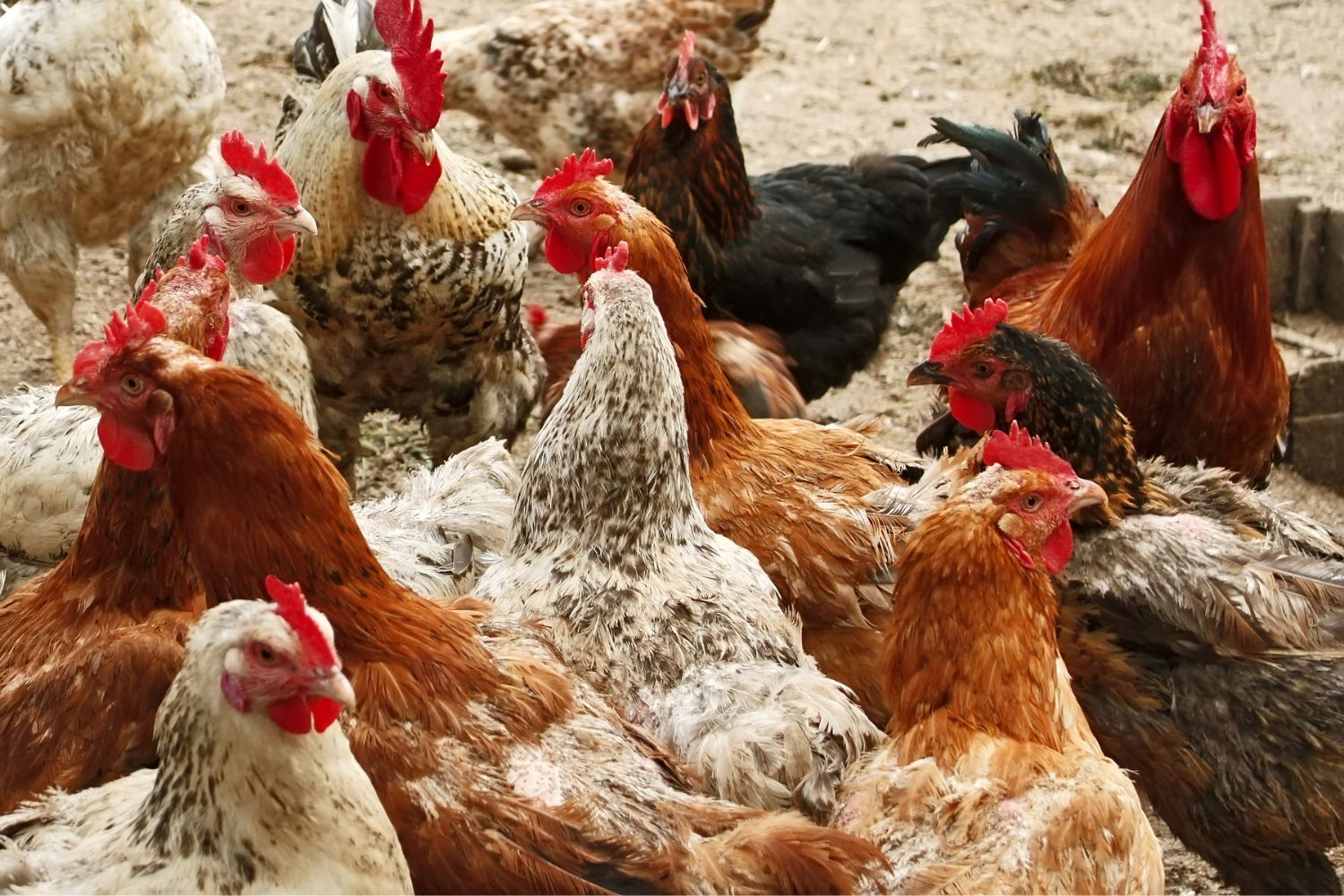
But here's what makes fall tricky. Real molting follows a pattern, it usually starts around the head and neck and works its way down the body over several weeks, roughly evenly on both sides. If what you're seeing is patchy, concentrated around the back or vent, or has been going on for a while without following that head-to-tail progression, it's worth looking closer before assuming it's the molt doing its job.

Because here's the part most keepers don't expect: feathers are almost entirely protein, and regrowing them takes real resources from your hen's body. If something inside the gut is intercepting that protein before her body can use it, whatever's regrowing won't come in properly, whether it's molt-related or not. And the parasites responsible for that are still highly active heading into fall, especially after a warm summer, they don't stop the moment the leaves turn.
That's the trap. Everyone's watching for molt this time of year, which means a real problem hiding underneath it gets a free pass that it wouldn't get in spring or summer.
Studies suggest 80-90% of backyard flocks are already carrying some parasite load. Fall doesn't create that problem. It's just the season it's most likely to go unnoticed.
Most of what keepers try when they see feather loss this time of year only deals with the surface:
Waiting it out as molting: if it's not following the normal head-to-tail pattern, waiting won't fix it
Switching to higher-protein feed: doesn't help if the protein's being intercepted before her body can use it
Butt baths: clean the outside, do nothing for what's happening inside
Deep cleaning the coop: good practice, doesn't address what's already inside your flock's gut
Homemade kitchen remedies: mixed by eye, no controlled ratio, so you're either underdosing (no real effect) or overdoing it without knowing
But there's a difference between trying something and trusting something. Every item on that list is a home experiment, no testing, no fixed ratio, no way of knowing if you're underdosing or overdoing it until it's already gone wrong. After 14 years, I don't guess at this anymore. I formulate to it.
Here's What I Recommend To My Patients
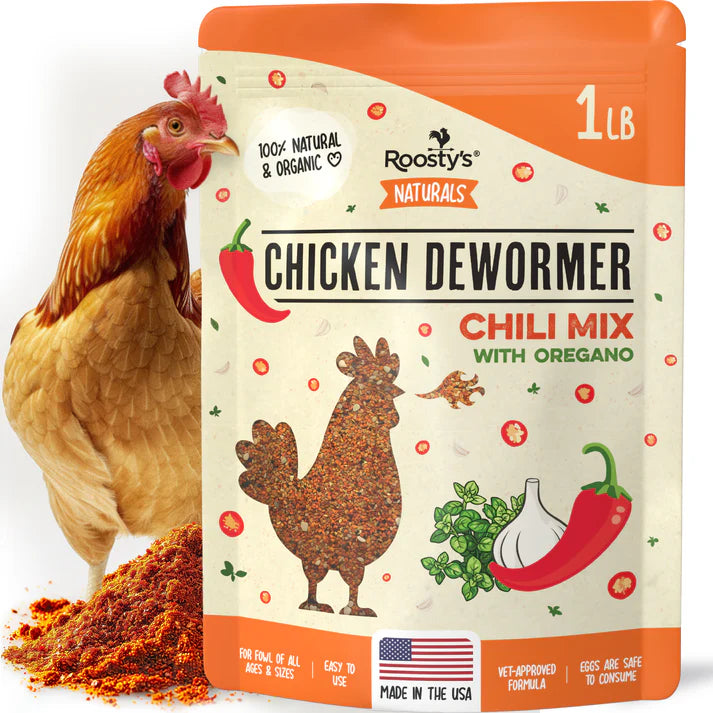
After 14 years, this is the one I keep coming back to: Roosty's Flock Armor.

4.8/5.0 from 6,363+ Chicken Owners
Here's why it works.
It's built around chili, specifically capsaicin, a compound your chickens can't taste but parasites genuinely can't stand. The parasites get flushed out of the gut and released harmlessly in the droppings.
Oregano and garlic go to work on the gut itself, supporting it through the stress of fighting off the infestation. Once the parasites are gone and the gut's working properly again, the protein from her feed finally reaches her body instead of being intercepted along the way, which is exactly what she needs whether she's mid-molt or recovering from something else entirely.
And unlike chemical dewormers, there's no egg withdrawal. You keep collecting and eating eggs the same day, every day.
It's vet-formulated to a fixed ratio every single time, which is the piece that's missing from doing this yourself at home.
What it actually costs your flock
As little as 12-13 cents per bird, per day, less than the price of a piece of gum at the grocery store, buys daily protection for every hen in your flock.

How it works in plain terms
Mix 1 pouch into every 50lb bag of feed, or 2 tablespoons per 3-7 birds if you're feeding daily by hand
Works with pellets, crumble, or scratch, just mix it through whatever you're already feeding
If your flock's a little hesitant the first few days, mixing it into a favourite treat usually does the trick

What to expect from daily use
Week 1
Capsaicin gets to work
Capsaicin starts working, creating an environment in the gut that's hostile to the parasites intercepting your hen's protein.
Week 2
Pin feathers appear
Many keepers start noticing pin feathers coming through on previously bald or patchy areas.
Week 4
Full regrowth underway
Feathers continue filling in, full and glossy rather than thin or patchy, whether it turns out to have been molt-related or not.
Month 2
Real gut healing underway
Garlic and oregano have had time to support real gut healing. Energy picks back up, combs return to a brighter red.
Month 3 & beyond
Your flock, thriving again
Full, healthy plumage heading into winter, brighter combs, and stronger eggs. That's not just recovery. That's what a flock that's actually thriving looks like.
Mistaking it for molting isn't a mistake, it's the least obvious time of year to catch it
Fall genuinely is molt season, so reaching for that explanation first is completely reasonable. You're not being careless by assuming it, you're just working with what every keeper's told to expect this time of year.
Here's the honest version: Roosty's is the only thing in that list that deals with the actual root of it, the parasites intercepting the protein your hen needs to regrow her feathers properly, whether the underlying trigger was molt, stress, or something else. Keepers who switch regularly see pin feathers within a couple of weeks and full plumage returning before winter sets in.

Dr. Valerie Henley' Choice
Roosty's Flock Armor
Daily parasite protection, no egg withdrawal
from $32.99 $26.43/month
Vet-formulated daily protection built for backyard flocks
No egg withdrawal, keep collecting and eating eggs the same day
Supports a healthy gut, not just a quick fix for symptoms
A flock that's noticeably healthier within weeks, more energy, better laying, cleaner vents